Death by PowerPoint: Why Your Perfect Design is Killing the Deal and What Investors Are Actually Looking For
- IBDA GLOBAL

- Mar 16
- 3 min read

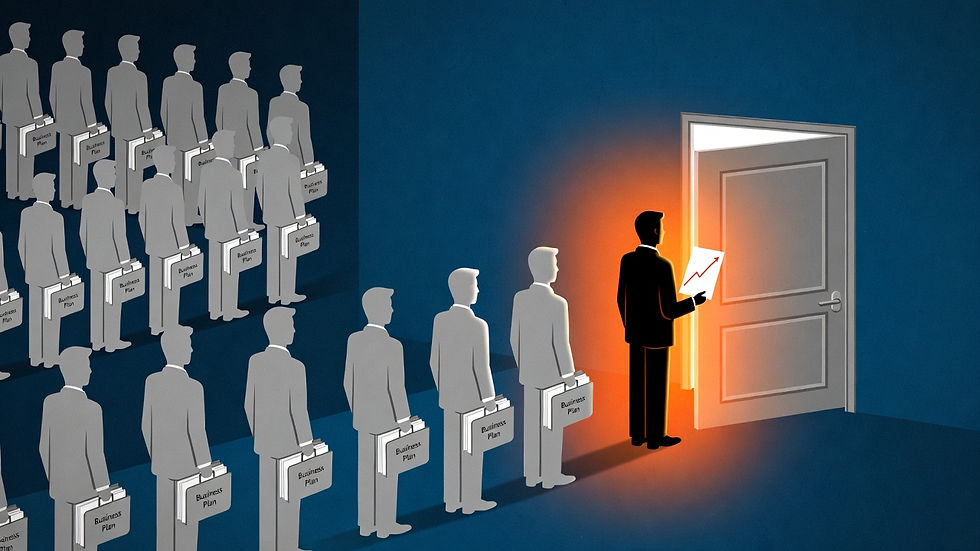
You paid a designer $2,000. Your slides look like an Apple website: minimalism, sans-serif fonts, a perfect color palette. You send the file to a fund and... silence. Why? Because you made a beautiful report. But the investor was waiting for a story. In 90% of cases, founders confuse a Pitch Deck with a progress report. They try to prove they are smart, hardworking, and that they’ve accomplished a lot. But a venture capitalist is not your school teacher giving out grades for effort. He is a cynical buyer of the future.
The Wikipedia Syndrome Open your deck. Slide 1: "We are Vector LLC." Slide 2: "Our services." Slide 3: "Our team." Slide 4: "Contacts." This is not a pitch. This is a business card. An investor reviews hundreds of presentations a week. He develops "banner blindness" to standard structures. To break through this filter, you need drama. You need conflict.
Your startup is not a set of features. It is a cure for pain. If you haven't shown the customer's "bleeding wound" (The Problem) and why existing "bandages" (Competitors) aren't helping in the first two slides, the investor will close the file. No pain—no money.
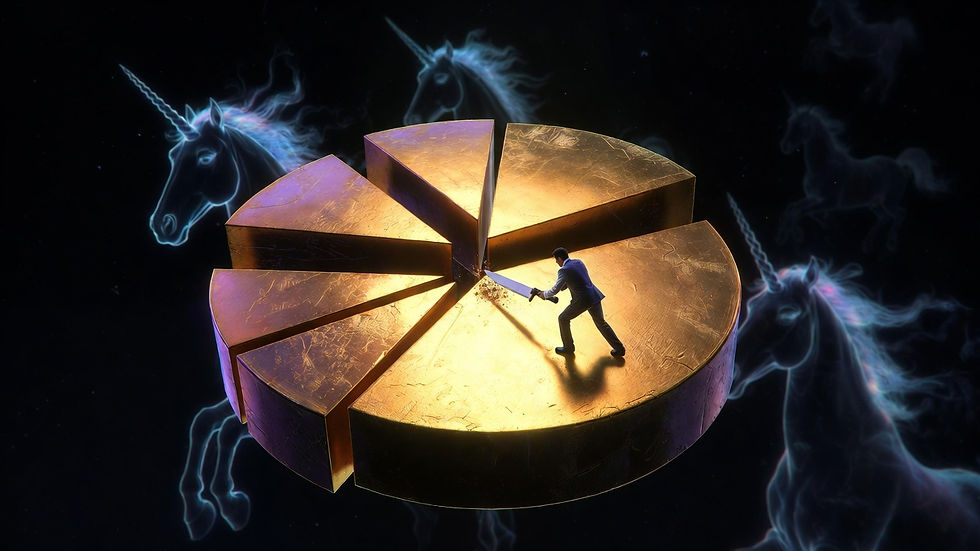
The Secret Ingredient: The "Why Now?" Slide This is the most underrated slide in history, the one that separates unicorns from zombies. Many ideas failed not because they were bad, but because the market wasn't ready. YouTube wasn't the first video hosting site, but it appeared when broadband internet arrived. Uber appeared when everyone had a GPS in their pocket. An investor always asks: "Why didn't Google do this 5 years ago? And why isn't it too late to do it now?" You must show the Wave.
"Legislation has changed." "The cost of technology has dropped 10x." "User behavior has shifted irreversibly due to the pandemic." You don't create the wave (that's impossible). You are the surfer who spotted it first. The investor gives you the board (the money) so you can ride that wave faster than anyone else.
You Are Not the Hero of This Story The most common mistake in storytelling: the founder makes themselves or their product the hero. "Look at our cool technology, look at the AI under the hood." This is a failure. In a good pitch, the Hero is your Customer. They want to get from Point A (where things are bad/expensive/slow) to Point B (where they are happy). And your product is not the Hero. Your product is the Magic Sword that the Hero uses to slay the Dragon (The Problem).
Investors don't invest in swords. They invest in armies of heroes ready to buy those swords to defeat their dragons. Don't sell the steel; sell the victory.
One Slide—One Thought Venture partners at Y Combinator and AngelList repeat it like a mantra: an investor spends an average of 3-5 seconds per slide. If a slide has a heading, three paragraphs of text, a chart, and two tables—you’ve lost. The investor won't read it. They will just swipe past.
The slide heading should be a statement, not a category name. Bad: "Market Growth." Good: "The online education market will triple by 2027 due to labor shortages." Even if the investor only reads the headings of your presentation, they should understand the entire story from beginning to end.
Conclusion Stop making "presentations." Start writing a blockbuster script where billions are at stake, the villain (the market problem) seems invincible, but you have a secret weapon that will tip the scales. Money is just the energy to realize the plot. Make the plot captivating.